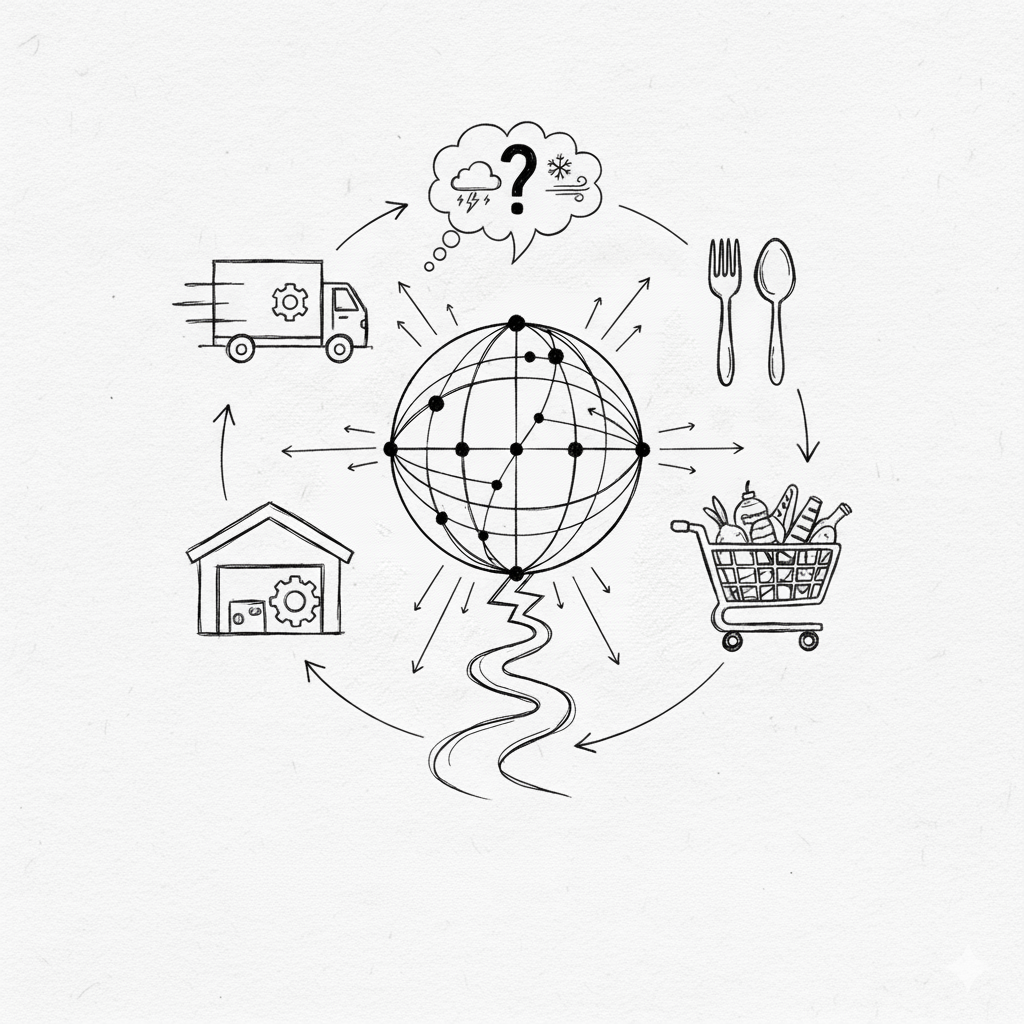

In my last article, I explored America’s hidden hunger crisis. But ensuring food security is just one piece of a much larger puzzle. How can we effectively plan for our communities’ needs—from food and water to infrastructure and healthcare—when the very populations we serve are in constant flux?
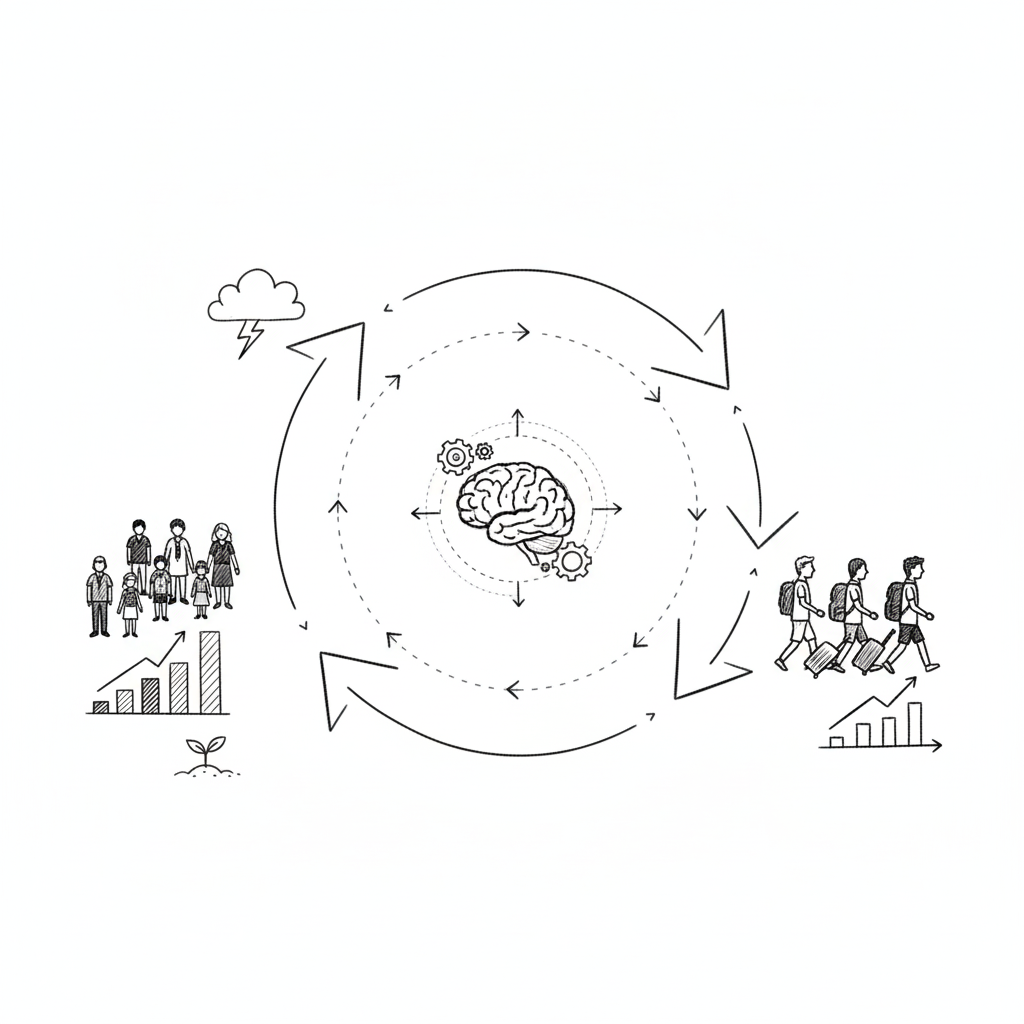
The core of the challenge lies in accurately modeling dynamic population changes. Predicting growth, economic shifts, and especially migration is notoriously difficult. Hunger and climate change are increasingly recognized as major drivers of migration, yet the complex interplay of these factors makes it incredibly challenging to forecast population movements.
Several key issues complicate these predictions:
- Multiple, interacting drivers: As the World Migration Report 2024 notes, “The multicausality of climate change, food insecurity and human mobility, as well as the relationships between them, are very complex.” It is difficult to disentangle the various social, economic, and environmental factors that push people to move.
- Lack of a direct causal link: Research from the International Institute for Sustainable Development has found “no discernible relationship between hunger levels and migration” when controlling for other factors. This highlights the indirect and nuanced connections between food insecurity and the decision to migrate.
- “Stressed” Migration: The UN’s Food and Agriculture Organization (FAO) emphasizes that much of this movement is not a free choice but a “last resort” for those facing dire circumstances. This “stressed” migration is often reactive and difficult to predict using traditional models.
- Data gaps: Accurately modeling these trends is further hampered by a lack of consistent, fine-grained data, particularly in regions most vulnerable to climate change and food insecurity.
These challenges are not just academic. They have real-world consequences for how we plan for everything from disaster response to long-term infrastructure development.
A better way forward: Synthetic Digital Twins
This is precisely the challenge we address with DataGenesis. Traditional models often fall short because they can’t capture the complex, interwoven factors that drive population dynamics. DataGenesis offers a superior method by creating what we call Synthetic Digital Twins.
Instead of relying on static projections, DataGenesis uses a Generative AI engine to build realistic, privacy-safe synthetic populations from the ground up. Here’s what makes this approach different:
- Rich, contextual data: We create fully dimensionalized populations with over 200 demographic, socioeconomic, and health attributes, all while preserving the complex correlations between them. This ensures that family structures, household relationships, and community dynamics are realistically maintained.
- Dynamic “What-if” scenarios: Our Synthetic Digital Twins allow planners to move beyond simple forecasting and run powerful “what-if” scenarios. You can explore how populations might evolve and respond to different trends or events, like economic shifts, climate-induced disasters, or demographic changes.
- Proven applications: We’ve applied this technology to critical planning needs, from modeling emergency supply chains in disaster zones to optimizing complex evacuation scenarios for vulnerable communities.
By creating a realistic, dynamic, and safe environment for analysis, DataGenesis overcomes the limitations of traditional methods. It empowers emergency managers, infrastructure planners, and policymakers to move from reactive decision-making to proactive, resilient strategies for the future.
The world is not static, and our planning tools shouldn’t be either.
About Skymantics
Skymantics is an innovative professional and technical services firm delivering custom solutions to support customers’ needs while supporting interoperability and standards. The company incorporates emerging technologies and agile methodologies in a rapid-prototyping approach to support domains in aviation, geospatial intelligence, and data analytics.
Would you like to learn more?
Feel free to Contact Us, we’ll be happy to help!