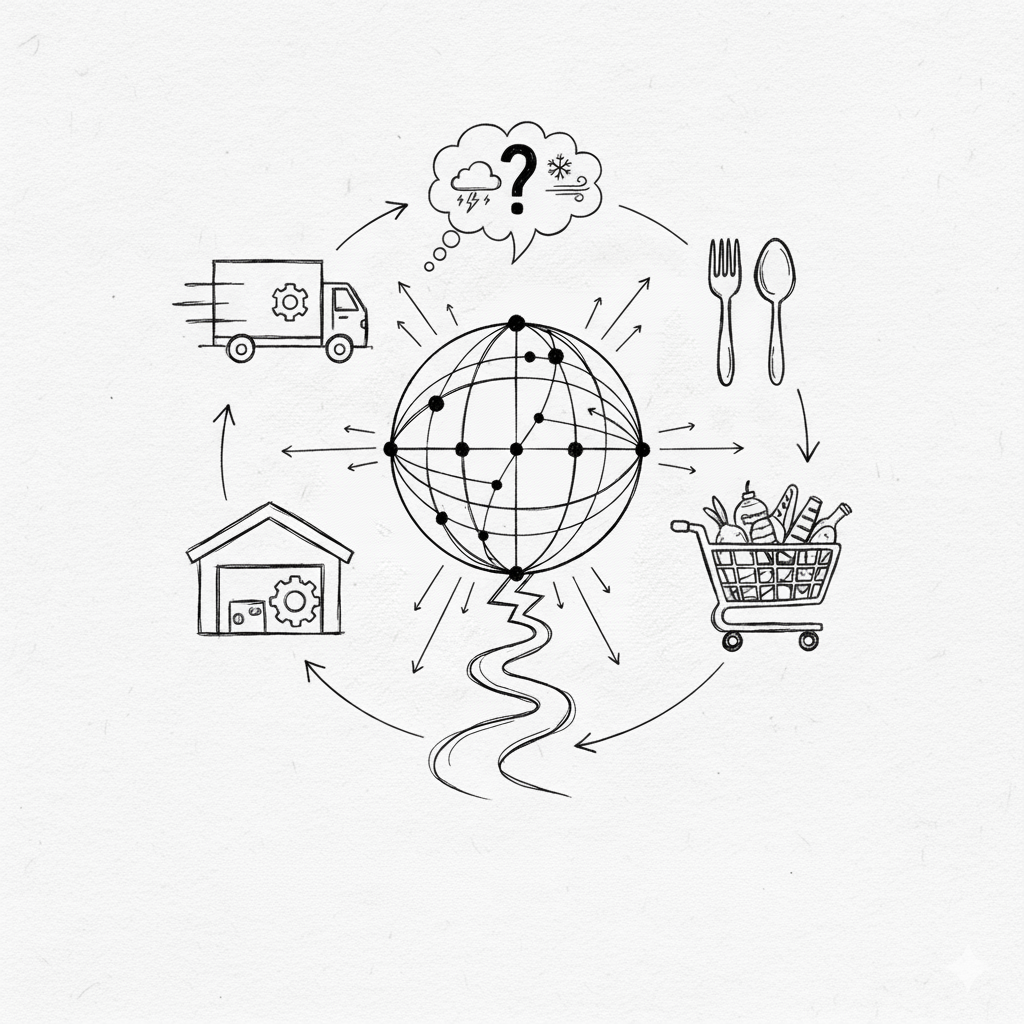

In this series, we’ve explored America’s “hidden hunger” and the need to understand vulnerable populations. But knowing who is vulnerable is only half the battle. The other half is understanding the food supply chain that serves them—a complex system that is brittle to disruptions like storms, floods, and power outages.
Current planning tools are reactive; they show us “what is” (like existing food deserts) but fail at simulating “what if.” They can’t predict how a major flood will create a new food desert in real-time. To build resilience, we must move from static mapping to dynamic, predictive simulation.
Today’s tools have critical blind spots: they don’t speak the language of logistics (failing to translate a “10-foot flood” into an “unusable warehouse”) and they ignore the human factor. Supply chains are people, and their adaptive behaviors—from panic-buying to fleet rerouting—are what ultimately determine if a chain bends or breaks.
A New Framework: The ‘What-If’ Simulation
We need an integrated “what-if” simulation framework—a digital twin of our food supply system. This approach combines three novel components:
-
A Geospatial Risk Toolkit: This translates raw hazard data (like flood forecasts) into operational impacts, telling planners not just if a road is flooded, but that it will be at 50% capacity for 24 hours.
-
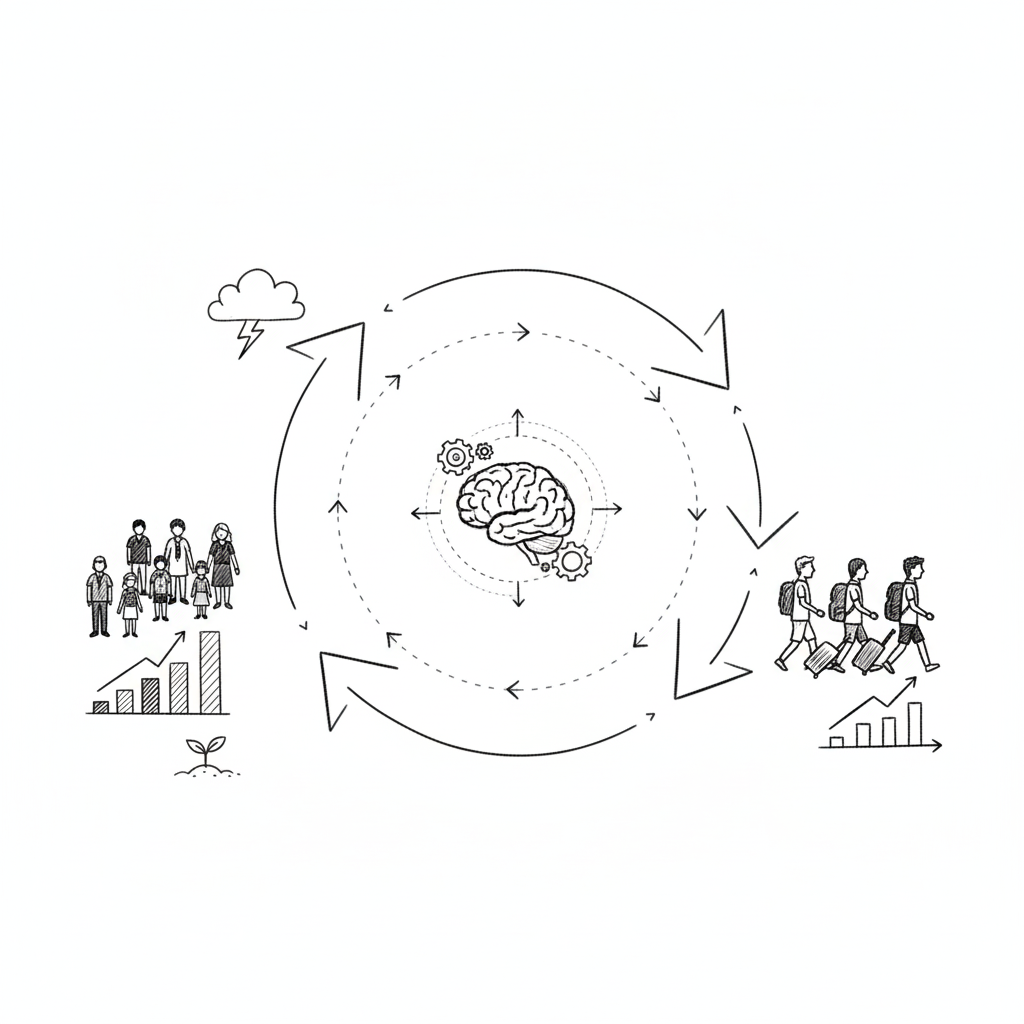
A Synthetic Foodscape Digital Twin: This is where DataGenesis provides the breakthrough. We generate a high-resolution, privacy-safe synthetic population, modeling every household with attributes like income and mobility. When a road is flagged as “at-risk,” we can instantly run accessibility analyses from every synthetic household to their food source, generating a “Time-to-Insecurity Forecast.”
-
A Geospatial-Behavioral Scenario Studio: Finally, we use agent-based modeling (ABM) to simulate the human factor. This “what-if” engine stress-tests policies before a crisis. Planners can compare Scenario A: Do nothing against Scenario B: Pre-stage supplies to see which intervention leads to the fastest, most equitable recovery.
From Reactive to Resilient
This marks a fundamental shift from static, reactive planning (“Here is a food desert”) to a dynamic, predictive one (“Here is how this storm will create a food desert, and here’s the best way to prevent it”).
By simulating the complex interplay of hazards, infrastructure, and human behavior, we can stop planning for the last crisis and start preparing for the next, building a future where everyone has access to food, no matter what.
This simulation-first approach is the core of our DataGenesis platform. DataGenesis is the model-based AI engine that generates the high-fidelity, privacy-safe synthetic populations discussed here, making it possible to model human behaviors and create a true “digital twin” of a community. It is the key technology that allows decision-makers to finally move from reactive analysis to predictive, “what-if” scenario planning, stress-testing their resilience strategies before a crisis ever hits.
About Skymantics
Skymantics is an innovative professional and technical services firm delivering custom solutions to support customers’ needs while supporting interoperability and standards. The company incorporates emerging technologies and agile methodologies in a rapid-prototyping approach to support domains in aviation, geospatial intelligence, and data analytics.
Would you like to learn more?
Feel free to Contact Us, we’ll be happy to help!