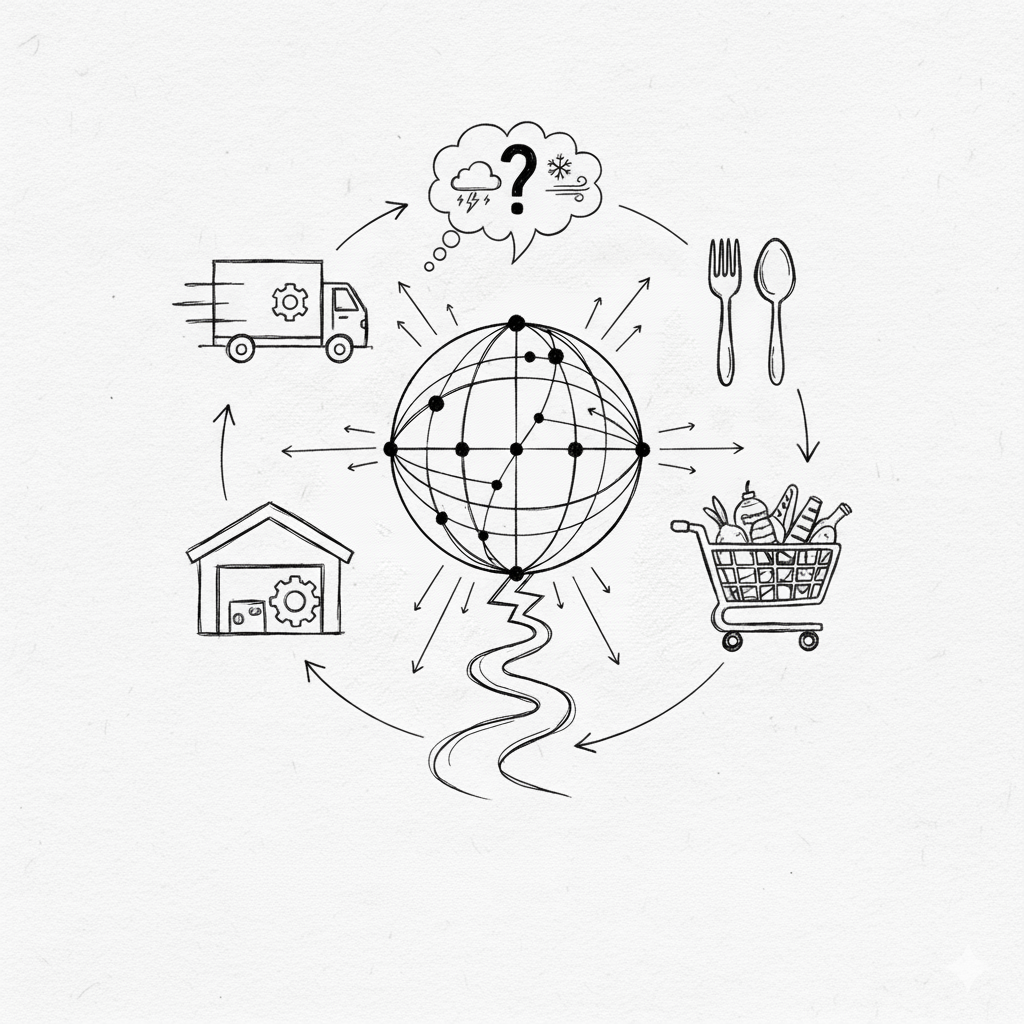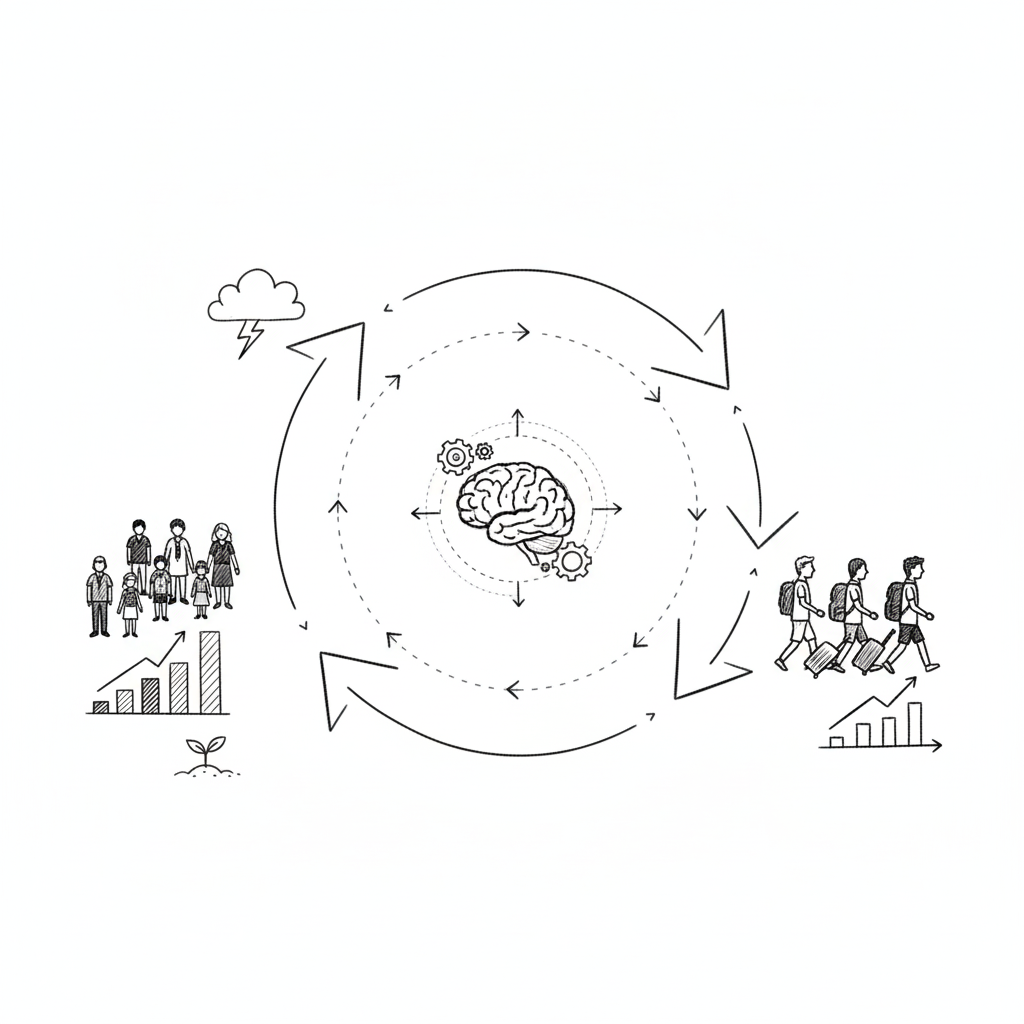

We often see images of hunger from distant lands, but the reality is much closer to home. While the U.S. is a land of abundance, a significant portion of its population struggles with food insecurity. In 2022, an astonishing 12.8 percent of American households—over 44 million people—faced a period where they had difficulty providing enough food for all their members. This isn’t just a fleeting problem; it’s a persistent, household-level economic and social condition that affects millions of our neighbors. The challenge isn’t a lack of food in the nation, but a crisis of access. As our country’s demographic landscape continues to shift in ways that are hard to predict, this challenge is poised to become even more complex.
The Global Context: An Uncertain Demographic Future
On a global scale, the headline number we often hear is that the world’s population will reach nearly 9 billion by 2050
More importantly, this uncertainty grows exponentially at smaller scales. Projections for individual countries and regions are far less certain than the global total because local errors don’t have the benefit of canceling each other out when aggregated
From Global Billions to Local Reality: Who is Food Insecure and Why?
The root of food insecurity is not a simple numbers game of population versus food supply. The Union of concerned Scientists (2021) argues that is a problem of systemic barriers, like poverty and social disadvantages, that prevent people from accessing the food that is available. In the United States, this reality is starkly reflected in the data. The USDA paint a clear picture of who is most affected:
-
Households with children, especially those headed by a single woman, experience food insecurity at higher rates than the national average.
-
There are significant disparities among different communities. Black (22.4%) and Hispanic (20.8%) households face food insecurity at rates far above the average for White households (9.3%).
-
Geography also plays a critical role. Rural households and those located in the South are more likely to struggle with having enough to eat.
These aren’t just statistics; they are communities and families whose well-being is tied to a fragile food access system.
Why Our Current Maps Are Failing Us
For years, we’ve relied on tools that map “food deserts”—areas with limited access to affordable and nutritious food. While useful, these tools often provide a static, bird’s-eye view of the problem. They show us where the problem is but can’t fully explain how it functions or how it will evolve.
Real-world food systems are incredibly complex, with multiscale dynamics and feedback loops between transportation, the economy, and household behavior. According to G. Miladinov (2023), most of our current tools are not built to handle this level of complexity. They can’t easily simulate how a sudden shock—like a major flood that washes out a bridge, or an economic downturn that closes a local factory—will cascade through the supply chain and affect different households in different ways. This is the core gap: we can see the problem now, but we can’t effectively stress-test our systems against the problems of tomorrow.
The Solution: A Digital Twin for Our Food Future
To tackle this challenge, we need a new generation of planning tools. The next frontier is the ability to build a dynamic digital twin of our food access ecosystem—a high-fidelity, virtual representation of a region that allows planners to explore different futures safely and efficiently. This requires two groundbreaking capabilities:
-
High-Fidelity Population Models: We need to move beyond aggregated data and create models that reflect the rich reality of our communities. This means simulating populations with a wide range of attributes—not just age and location, but also health status, income, and mobility constraints. Instead of just identifying a “food desert,” this approach allows us to model the specific daily travel and budget constraints of a synthetic single-parent household in a rural area or a family with specific dietary needs in a dense city.
-
Behavioral Simulation: We need the power to simulate how different people and parts of the supply chain would react to a disruption. A behavioral model can show how a logistics provider might reroute trucks after a highway closure, how a retailer manages inventory during a panic-buying event, and how a consumer chooses to get food when their usual grocery store is inaccessible.
By combining these capabilities, we can move from simply reacting to problems to proactively designing solutions. We can test the effectiveness of new policies and infrastructure investments—like mobile grocery markets, new delivery routes, or community food hubs—before a single dollar is spent.
Conclusion: Building a Food-Secure Future, Neighborhood by Neighborhood
Food insecurity is a significant challenge to our national well-being. To solve it, we must address the specific, complex needs of our most vulnerable populations. In a world of increasing demographic uncertainty and sudden disruptions, our old ways of planning are no longer sufficient.
The path forward lies in embracing innovative, predictive tools that allow us to understand our food systems with unprecedented clarity. By simulating the future, we can make smarter decisions today. It’s time to build a more resilient and nourished America, one neighborhood at a time.
About Skymantics
Skymantics is an innovative professional and technical services firm delivering custom solutions to support customers’ needs while supporting interoperability and standards. The company incorporates emerging technologies and agile methodologies in a rapid-prototyping approach to support domains in aviation, geospatial intelligence, and data analytics.
Would you like to learn more?
Feel free to Contact Us, we’ll be happy to help!